Teaching your child the Quran at home is one of the greatest gifts you can give them. It helps build a lifelong connection with the Book of Allah, strengthens their Islamic identity, and encourages good character from an early age.
However, many parents quickly discover that teaching the Quran isn’t always easy. Children may lose focus, become frustrated, or refuse to practice. Parents, in turn, may feel discouraged and wonder if they’re doing something wrong.
The good news is that teaching the Quran at home doesn’t have to be stressful. With patience, the right approach, and realistic expectations, you can create a positive learning experience that your child enjoys.
In this guide, you’ll learn practical tips to help your child love learning the Quran—without daily battles or frustration.
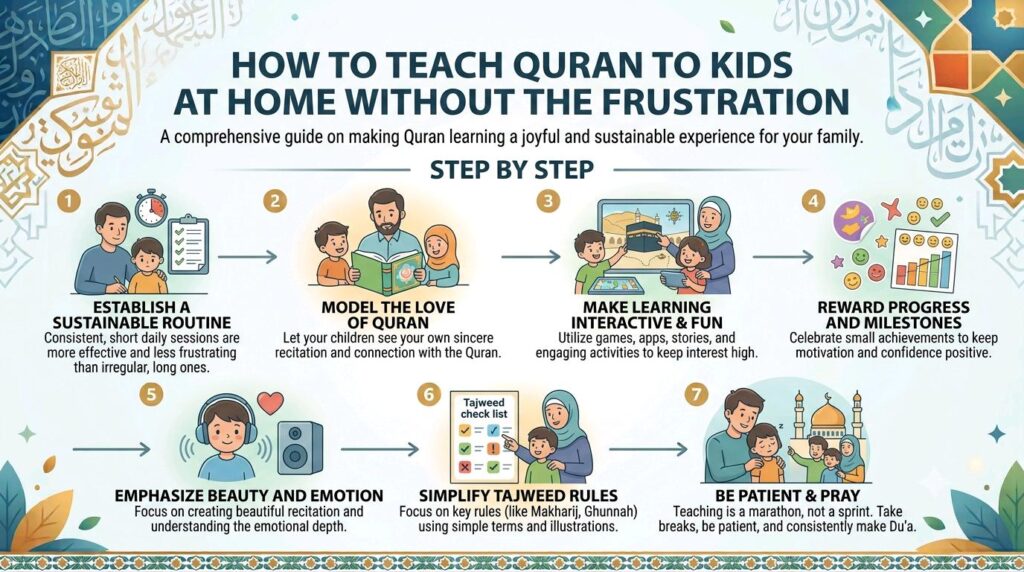
Why Children Struggle With Quran Learning
Before solving the problem, it’s helpful to understand why children sometimes resist Quran lessons.
Common reasons include:
- Lessons feel too long.
- They are expected to learn too much at once.
- The teaching style isn’t engaging.
- They fear making mistakes.
- They become tired after school or other activities.
When parents recognize these challenges, they can adjust their approach to make learning easier and more enjoyable.
1. Keep Lessons Short and Consistent
Young children have limited attention spans.
Instead of asking your child to study for an hour, aim for 20 to 30 minutes of focused learning each day.
Short, regular lessons are often far more effective than long sessions that leave children feeling overwhelmed.
Consistency helps children develop a healthy routine and makes Quran learning a natural part of daily life.
2. Start With the Basics
Every child learns differently, but every Quran learner begins with the same foundation.
Start with:
- Arabic letters
- Basic sounds
- Noorani Qaida or another beginner-friendly Qaida
- Simple pronunciation exercises
Avoid rushing into reading full Quran pages before your child is ready.
A strong foundation leads to faster progress later.
3. Make Learning Fun
Children learn best when they enjoy the experience.
You can make Quran lessons more interesting by:
- Praising effort instead of only correct answers
- Using colorful learning materials
- Playing simple letter-recognition games
- Setting small weekly goals
- Celebrating progress with encouraging words
Positive experiences help children look forward to their next lesson.
4. Never Compare Your Child With Others
One child may learn Arabic letters in a few weeks, while another may need several months.
Comparing children can reduce confidence and increase anxiety.
Instead of saying:
“Your cousin reads better than you.”
Try saying:
“You’re reading much better than you did last week. Keep going!”
Encouragement builds confidence, and confident children are more willing to learn.
5. Focus on Correct Pronunciation From the Beginning
Good pronunciation is more important than reading quickly.
Teach your child to pronounce each Arabic letter clearly before moving on to longer words.
Learning the correct Makharij (points of pronunciation) early helps prevent mistakes that can become habits later.
If you’re unsure about pronunciation, learning alongside a qualified Quran teacher can be very helpful.
6. Create a Calm Learning Environment
Children concentrate better in a quiet, comfortable space.
Choose a place that is:
- Free from television and loud noises
- Well-lit
- Comfortable for sitting
- Free from unnecessary distractions
A peaceful environment helps children focus on their lessons.
7. Be Patient With Mistakes
Mistakes are a normal part of learning.
If your child struggles with a word, avoid showing frustration.
Instead:
- Repeat the word slowly.
- Let them try again.
- Praise their effort.
- Move forward without criticism.
Children who feel safe making mistakes usually learn more confidently.
8. Practice a Little Every Day
Daily revision is one of the fastest ways to improve Quran reading.
A simple routine might include:
- Five minutes reviewing yesterday’s lesson
- Fifteen minutes learning something new
- Five minutes reading previously learned words
Small daily improvements lead to lasting results.
9. Lead by Example
Children often copy what they see.
If your child regularly sees you reading the Quran, they are more likely to develop the same habit.
Even reading a few verses each day can inspire your child to value Quran learning.
Parents are often a child’s first and most influential teachers.
10. Consider One-to-One Online Quran Classes
Many parents want to teach their children at home but don’t always have the time, confidence, or knowledge to correct pronunciation and Tajweed.
One-to-one online Quran classes can provide:
- Individual attention
- Qualified Quran teachers
- Correct pronunciation guidance
- Flexible class schedules
- Lessons suited to your child’s learning level
Parents can still stay involved by encouraging practice and celebrating progress at home.
Common Mistakes Parents Should Avoid
Expecting Fast Results
Learning the Quran is a journey, not a race.
Celebrate steady progress instead of expecting perfection.
Correcting Every Small Mistake Immediately
Too many interruptions can reduce a child’s confidence.
Allow your child to finish reading before gently correcting major mistakes.
Skipping Revision
Children remember more when they regularly review previous lessons.
Revision strengthens memory and builds confidence.
Using Fear Instead of Encouragement
Positive motivation usually produces better long-term results than pressure or punishment.
Children are more likely to enjoy learning when they feel supported.
Benefits of Teaching Quran at Home
Teaching your child the Quran at home offers many advantages:
- Builds a daily Quran routine
- Strengthens family bonds
- Encourages Islamic values
- Develops confidence in Quran reading
- Creates positive learning memories
- Helps children grow spiritually from an early age
When home learning is combined with guidance from a qualified teacher, children often make steady and meaningful progress.
Final Thoughts
Teaching the Quran at home doesn’t have to be a source of stress. By keeping lessons short, making learning enjoyable, staying patient, and encouraging your child every step of the way, you can help them build a lifelong love for the Quran.
Remember that every child learns at a different pace. Focus on progress rather than perfection, and celebrate each new letter, word, and verse your child learns.
Your encouragement today can inspire a lifetime of Quran learning tomorrow.
Frequently Asked Questions (FAQs)
At what age should a child start learning the Quran?
Many children begin learning Arabic letters between the ages of 4 and 6, but the best age depends on the child’s readiness, attention span, and interest.
How long should a Quran lesson be for children?
For most young children, 20 to 30 minutes of focused learning is enough. Short, consistent lessons are usually more effective than long sessions.
Should parents teach the Quran themselves?
Parents can teach the basics if they have the knowledge and confidence. If not, a qualified Quran teacher can provide accurate guidance while parents support daily practice at home.
How can I motivate my child to learn the Quran?
Praise effort, celebrate small achievements, create a regular routine, and make lessons enjoyable. Positive encouragement helps children stay motivated.
SEO Meta Title
How to Teach Quran to Kids at Home Without the Frustration | Parent’s Guide
SEO Meta Description
Learn how to teach the Quran to kids at home without stress. Discover simple, practical tips to make Quran learning enjoyable, build confidence, and help your child develop a lifelong love for the Quran.